0:23:40
-
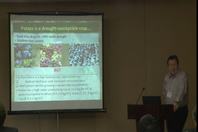
Influence of water stress on growth, yield and quality of potato (Solanum tuberosum L.) under the arid climatic conditions of Central Asia
- 第十一届国际旱地发展会议——In the significant and positive linear relationship between DTI and HI the tested genotypes clearly show that under drought they seem spending their last energy in producing tubers. The assumption that the higher is HI the earlier should be considered the crop type should be valid only under water stress conditions because those CIP clones under long photoperiods and optimum irrigation behave as mid-early,medium types with persistent green vegetation and profuse flowering even if tubers are already set.
- キーワード:马铃薯 干旱作物 CIP克隆长光周期
0:17:09
-
Improving water productivity in a cropping system: traditional and modern methods
- 第十一届国际旱地发展会议——The sap flow technique can be very useful device for the management of farming systems. This plant base assement technique is very important, especially in the field where the control of environmental factors is difficult. They allow quick screening and specific environmental constraints and guiding the proper cultural practices in a timely manner.
- キーワード:液流技术 耕作制度 远程控制灌溉

0:13:52
-
Impact of use of drainage on water delivery performance in irrigation networks at the lower Nile Delta
- 第十一届国际旱地发展会议——The arable area in Egypt used for agriculture production is around 5.0% of the total area. Nile river is considered as the main water source in Egypt. Drainage reuse was practiced since 1970 in the lower Egypt. Drainage reuse provide 7.0 BCM per year. Use of drainage water is an important water resources in areas where irrigation water is scarce specially in lower delta. It was proposed to substitute shortage in fresh water supply from the available drainage water.
- キーワード:农业生产 灌溉水 水供应短缺 尼罗河流域
0:25:33
-
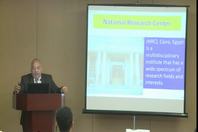
Halophytic plants (environmentally smart crops) for forage, biofuel production and soil bioremediation
- 第十一届国际旱地发展会议——Feeding the world at a time of climate change is one of the major challenges of our generation Global food production must rise 70% by 2050 to feed over nine billion people worldwide: with the expectation that climate change with reduce food crop worldwide. So we need untraditional solutions.
- キーワード:粮食问题 环保智能农作物 生物燃料
0:14:52
-
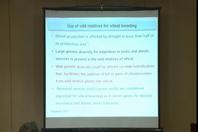
Genes involved in cross-tolerance to drought and salinity in Leymus: Identification and expression analysis in wheat-Leymus chromosome addition lines
- 第十一届国际旱地发展会议——Wheat production is affected by drought in more than half of its production area. Large genetic diversity for adaptation to biotic and abiotic stresses is present in the wild relatives of wheat. Wild genetic diversity could be utilized via wide hybridization that facilitates the addition of full or parts of chromosomes from wild relative plants into wheat.
- キーワード:小麦羊草染色体 遗传多样性 近缘植物 干旱植物

0:12:45
-
Evaluation of Chickpea Kabuli Types under Stress and Unstress Condition of Iran
- 第十一届国际旱地发展会议——Drought stress is one of the most important abiotic stresses in the world which it affect for reducing grain yield of crops. Terminal drought stress is the most yield reducer in rainfed areas on Iran. The long term average of annual rainfall in Iran is 252 mm and reduced to 127.3 mm in 2007-2008, which was a sever dry season.
- キーワード:伊朗 干旱地区 年平均降水量

0:17:55
-
Escalation of wind erosion from oilseed bioenergy crops grown in the Pacific Northwest,USA
- 第十一届国际旱地发展会议——Sediment and PM10 flux are higher from an oilseed crop rotation. The higher flux was in part due to less crop residue after the oilseed crop. Wind erosion was assessed at sowing when soil was most susceptible to erosion,life cycle analysis during fallow required to determine overall performance. Inclusion of oilseeds into conventional crop rotations may degrade air and soil quality in the US Pacific Northwest.
- キーワード:传统小麦种植系统 油籽生物 生命周期分析 可吸入颗粒物

0:15:52
-
Enhanced tropospheric ozone under global climate change situation and its effects on yield and some fatty acids in Thai soybean at Northern Thailand
- 第十一届国际旱地发展会议——The observation results in these experiments provide the evidences that our results demonstrated that elevated O3 concentrations induced significant suppression in yield when number of pod/plant was assigned as yield parameter. Whereas,fatty acid;linoleic and linolenic content;were strongly increased under high ozone concentration in CF-Ozone treatment by significant. Linoleic content showed more increase than linolenic. The results also suggest that soybean planting under O3 concentration at lower ambient levels, showed the best yield. Thus, management of O3 reducing,preventing further damages, and finding the proper countermeasures are needed and necessary.
- キーワード:臭氧浓度 泰国大豆 对流层臭氧
0:18:04
-
Effects of over-expressing of rice glycogenin-like protein (OsGGT1) on tolerance to complete submergence and drought stress
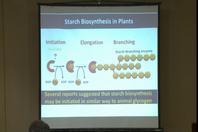
- 第十一届国际旱地发展会议——Rice glycogenin conserved same domain as animal and yeast glycogenins. Rice OsGGT mutant could still maintain some starch level which possibly due to the effects of other GGT like gene in rice genome. OsGGT overexpression slowed starch rapid depletion under submergence conditions.
- キーワード:OsGGT突变体 水稻基因 水稻糖原
0:10:48
-
Effect of irrigation frequency on yield and quality of melon under open field conditions in Minqin oasis
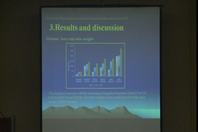
- 第十一届国际旱地发展会议——In most arid regions the fresh water is not enough for drinking and irrigation use. So,the only water available to the farmers is the saline groundwater. The long-term uses of saline groundwater combined with a high evaporation have determined an increase of soil salinization. The negative impact of saline irrigation water can be mitigated by implementing appropriate management of saline water and irrigation schedule for the plants. Furthermore, it is essential to develop the most suitable irrigation schedule to get optimum plant yield for different ecological regions as plant water consumption depends mostly on plant growth,soil and climatic conditions.
- キーワード:灌溉频率 土壤盐渍化 生态